Kose Africa: How Zimbabwe's Harare Super-App Is Combining Rides, Deliveries and Local Commerce
Kose wants one Harare app for journeys, parcels, food and shopping. ITBank examines its model, local-market relevance, driver economics and the questions that still need answers.
Independent original ITBank company analysis drafted with AI assistance from linked public sources. Statements about Kose's features, corporate structure and expansion are attributed to the company or app listings; no founder interview, independent market-share measurement, ride booking, merchant purchase, audited financials or endorsement. Requires human editorial and sourcing review; no rights-cleared imagery.
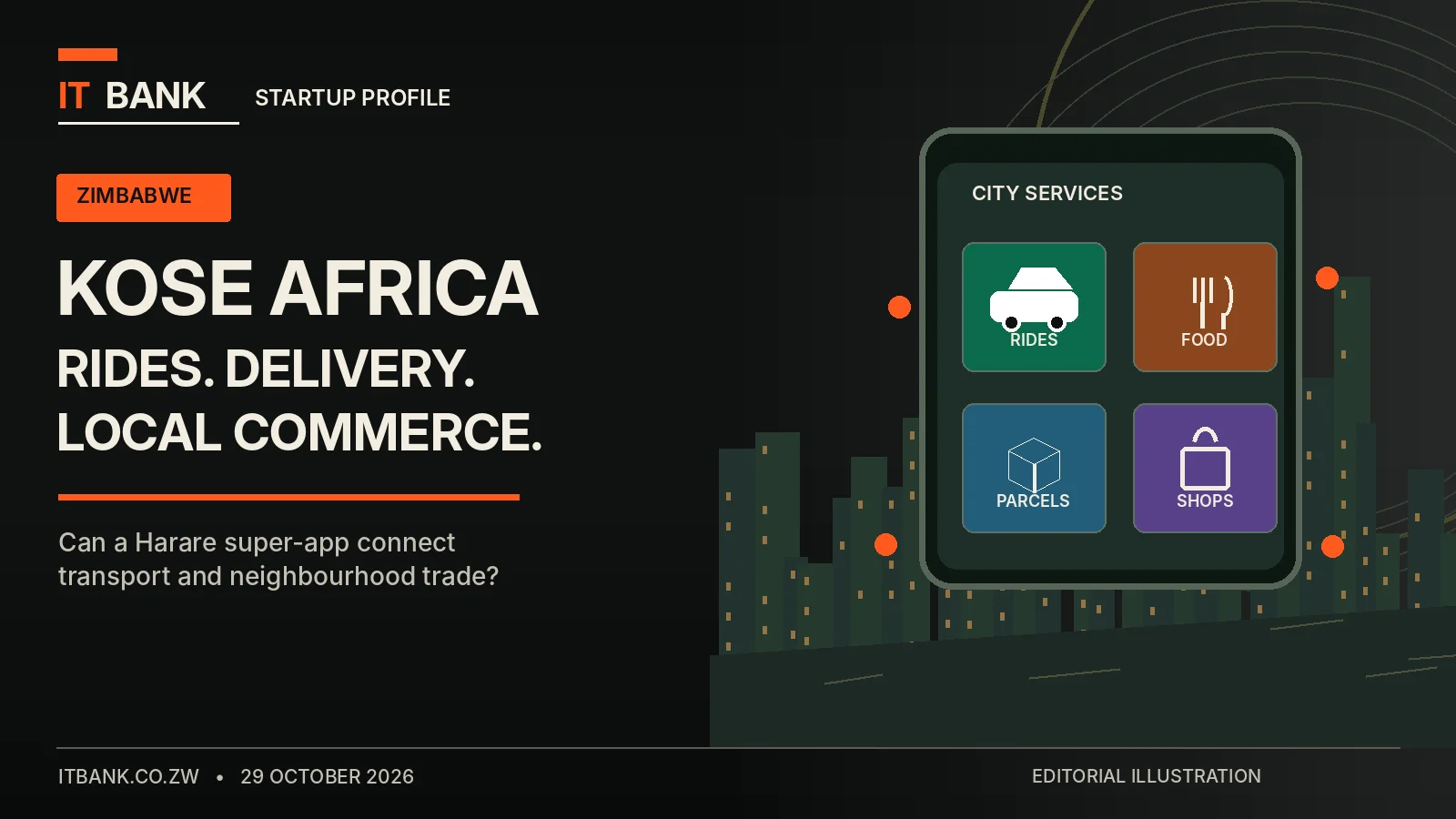
Harare, Zimbabwe | 29 October 2026
Zimbabwe's Kose Africa is trying to make everyday movement and local commerce work inside one digital service. From arranging a ride to sending a parcel, ordering a meal and browsing nearby shops, the idea is that a resident should not need a separate account and delivery relationship for each transaction. It is an ambitious model for any city. Its real test, however, will be whether drivers, restaurants, merchants and customers can find enough reliable activity to keep using it.
Kose's current website identifies Harare as its live market. The company's public LinkedIn description presents a wider African ambition, with Bulawayo and Victoria Falls described as future expansion targets. That is a plan, not evidence that those cities are already operational.
A Zimbabwe-focused super-app, not just a taxi app
Kose describes three connected customer experiences:
Kose Rides and Send: users request transport or dispatch parcels, review an upfront fare, and check the assigned driver and vehicle information. On eligible ride options, the company says the rider can propose a different fare before requesting a match.
Kose Eats: customers browse participating local kitchens, request food delivery and follow fulfilment. Which restaurants are actually taking orders depends on location and time.
Kose Shop: local merchants can list goods for delivery through Kose's marketplace. Its published storefront includes product discovery, a cart, merchant listings and payment references, although the number of items available to purchase can change rapidly.
The company also advertises separate applications for drivers and merchants. Together, the system is more complex than a ride-hailing interface: it must co-ordinate dispatch, merchant inventory, payment information, customer support and disputes across several different transactions.
What makes the offer locally relevant?
Price clarity is a sensible starting point in a city where customers may already compare several ways of moving around. Kose's Android Google Play listing says passengers can see the quoted fare and offer their own amount on eligible trips. The company also highlights driver photos, number plates, trip tracking, sharing and assistance features.
Zimbabwean payment habits create another design challenge. Kose's public website describes cash and available digital payment methods, but its Android listing has also labelled some wallet and mobile-payment functionality as coming soon. Customers should rely on payment options displayed in the actual checkout flow, not assume every promoted option is operational for every service.
A local platform could potentially create value for small restaurants and retailers by giving them shared access to customers and couriers. But a merchant's success will depend on actual buyer traffic, order volume, commissions, fulfilment reliability and chargeback or refund rules—not merely having a profile on a new marketplace.
The company and its operating model
Kose's rider terms identify Kose Africa (Pvt) Ltd as a subsidiary of Zano Money (Pvt) Ltd and describe drivers and couriers as independent contractors. That structure means the company presents itself as a marketplace connecting buyers and service partners, rather than the direct employer or provider of every trip.
Its public LinkedIn profile lists a founding year of 2025. ITBank has not independently verified its financing, revenue, founder ownership structure, active users or completed-trip volume. Public app-store download thresholds indicate interest or installations, but they do not tell us how many paid rides were fulfilled or whether drivers earn enough to remain active.
For this business model, the crucial question is marketplace liquidity. If someone opens the rider app at 6:30 am and no suitable driver is available, the platform's other features cannot rescue that missed trip. The same applies when a customer searches for dinner but finds no kitchen accepting orders. Supply density within a neighbourhood matters more than the number of cities named in an expansion roadmap.
The company's LinkedIn updates have discussed driver onboarding and verification workloads. That is a useful illustration of the tension facing an early-stage transport marketplace: recruit participants quickly, but do not undermine checks intended to protect riders.
What Kose still needs to demonstrate
A credible growth story would require more than branding. There are at least five practical tests:
1. Rider fulfilment: percentage of booking requests matched, cancellations and actual pickup times by suburb and time of day. 2. Driver economics: take-home earnings after fuel, vehicle maintenance, insurance, commissions and unpaid waiting. 3. Merchant outcomes: completed orders, delivery fees, settlement delays, returns and actual repeat customers. 4. Safety response: how identity checks, trip sharing, SOS and complaint resolution operate in real incidents. 5. Payment clarity: which methods, fees, fare adjustments and surge-related rules are in effect.
One documentation issue needs clarification. A version of Kose's website has advertised no surge pricing, while the published rider terms contain clauses permitting surge multipliers and describing final fares that may differ from estimates. This is not proof that surge pricing has actually been charged; it is a reason for the company to make its current policy unambiguous.
Kose's terms refer to Zimbabwe, Zambia and South Africa, but its current homepage specifically describes Harare as live. The broader legal coverage should not be interpreted as confirmed operational availability in those countries.
Why Kose matters beyond Harare
The potential lesson for other African founders is that integrating several urban services can make a business more useful only when the underlying individual services work. Cross-selling a ride customer into food delivery is attractive in theory. In practice, the company still needs to win on price, selection, reliability, service response and trust.
Kose is a legitimate subject for close observation because it is attempting to solve local problems with an interconnected product rather than copying the appearance of a foreign super-app. Whether it can deliver durable unit economics, a consistent driver network and meaningful benefits for local merchants remains to be demonstrated.
ITBank assessment: Kose is an interesting Zimbabwean urban-platform venture with a coherent customer proposition and significant operational challenges. The important next milestones are not merely more features or more cities, but verifiable booking reliability, repeat users, transparent commercial terms and healthy partner economics.
Editorial disclosure: This article is independently written desk research based on Kose's public website, legal terms, app-store listings and company-supplied statements. ITBank has not interviewed management, booked a ride, ordered food, tested safety features or audited operating figures. Company claims are attributed and do not constitute endorsement.
### Sources
Report a factual issue · Advertising & affiliate policy
 Intron Startup Profile: Building Voice Technology Around African Speech ↗
 BuuPass Startup Profile: Why Digital Bus Tickets Need Reliable Operator Systems ↗